

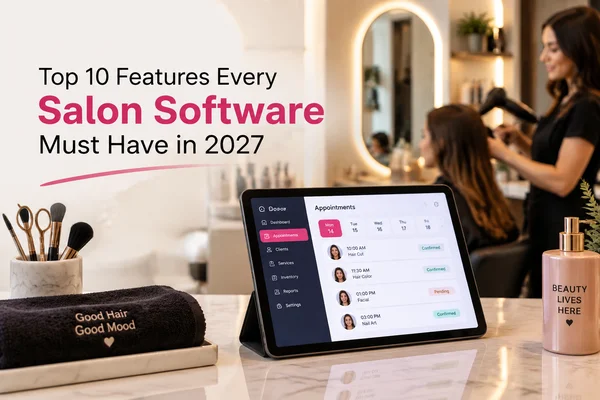
Running a salon in 2027 will include much more than managing appointments and accepting payments or schedule bookings. With time, consumers also become smart and expect quick booking, easy payments, personalised offers, and smooth communication. Simultaneously, salon owners need better control over staff, stock, consumers, and daily revenue.
This is where modern salon software comes into play. Therefore, the right salon software features bring booking, customer engagement, payments, staff scheduling, marketing, and reporting all under one system. Also, it might cut down the headache of doing everything manually while giving salon owners a clear, kind of transparent view of what’s really going on with their business, day to day.
Because of that, if a salon is aiming to build its own platform, the custom salon software development side usually means you get full control over what’s included, like features, branding, integrations, and also where it can grow later on.
This guide sort of highlights the top 10 salon management software features that companies should keep in mind when planning a salon app solution for 2027.
Quick Answer: What Features Should Salon Software Have in 2027?
The key salon software features for 2027 are mostly online booking, customer profiles, staff scheduling, automated alerts, payments, inventory tracking, marketing tools, business reports, and AI powered automation.
But the exact features should be dictated by the exact way your salon app is functioning, depends on how it actually behaves day-to-day. A small beauty studio might only need simple booking and payments, while a salon chain may require multiple locations, detailed reports, and then a central management layer or something along those lines.
Feature 1. Online Appointment Booking
Online booking should be the core features of a modern salon platform. Also, customers shold be able to view available services, select a preferred professional, select an open time, and confirm an appointment without making a phone call. Therefore, a good booking system can include Real-time appointment availability, service and staff selection, Booking changes and cancellations, multiple salon locations, waiting lists, and booking confirmation.
A salon booking app development project can take this way further by giving customers a dedicated mobile experience.
For example, a regular customer could open the salong app, choose their usual stylist, pick their normal service, and book an available slot within a few clicks. This simplifies life for customers and cuts down manual booking work for salon teams.
Feature 2. Customer profile, CRM management
A salon also builds better relationships with the customer knowing each customer’s likes and dislikes. A pre-built customer relationship management system can keep useful information all in one place. It includes:
Contact details
Appointment history
Preferred services
Preferred staff members
Product purchases
Loyalty points
Customer notes
Such salon management software features allow staff to provide a more personalised service. Instead of treating every visit as a new interaction, the salon can use past details to understand what the customer eventually books and offer a more consistent experience.
Feature 3. Staff Scheduling and Management
Managing staff through spreadsheets or paper schedules becomes difficult as salon grows. Therefore, a modern salon software should offer a centralised staff dashboard where managers can organise working hours, shifts, leaves, appointments, services offered by every employee, availability, and performance information.
Also, the booking system should also connect with staff schedules. Owners, managers, receptionists, and stylists can have access to the information they require.
Feature 4. Automated Reminders and Alerts
Missed appointments can end up meaning lost revenue , plus that “unused staff time” like you scheduled people for nothing. Automated reminders let salons nudge customers before the appointment, without having staff send every message by hand, which gets messy pretty fast when things are busy.
Notifications might include things like
Appointment confirmations
Upcoming appointment reminders
Rescheduling alerts
Cancellation updates
Payment confirmations
Special offers
Depending on how the system is set up, communication can go out through email, SMS, push notifications , or some other linked channels. And salons can use the reminders too, not just for “the day before” stuff but also to help customers book again.
Feature 5. Point of Sale and Digital Payments
Booking and payment should really work together, no separation, because customers expect it to just flow. With a built in Point of Sale (POS) system salons can manage service charges and product payments from the same place they use for appointments. This tends to keep everything aligned, and that matters.
Payment functions may cover
Card payments
Digital payments
Deposits
Invoices and receipts
Refunds
Discounts
Gift cards
For example, a salon might ask for a deposit when someone books a higher value service. The software can log that deposit and then apply it automatically to the final bill later.
When booking and payment details are connected , owners can get a cleaner view of daily sales, not just guessing from reports.
Feature 6. Inventory and product management
Many salons sell shampoo, skincare, cosmetics, hair treatments, and other beauty goods. So inventory control should be included in a full salon system.
Inventory tools can track
Current stock
Products sold
Low-stock items
Product categories
Suppliers
Stock movement
Low stock alerts are especially helpful. Instead of finding out an essential product is gone during an appointment, the system can warn staff earlier, so there’s time to fix it.
And custom salon software development can tie product sales to inventory, so stock levels update straight after a purchase, automatically, without extra manual work.
Feature 7. Loyalty and Membership Management
Keep an existing customer engaged can be just as crucial as finding a new one. Therefore, salon software can support loyalty programs that reward repeat visits and purchases.
The best possible features include:
Loyalty points
Membership plans
Reward levels
Referral rewards
Birthday offers
Service packages
Discount codes
For example, customers could earn points after every appointment and use such points for an eligible product or service.
Moreover, a custom platform gives salons more control over how such programs work instead of forcing them into a fixed reward structure.
Feature 8. Marketing and Customer Engagement
Customer data becomes more useful when salong can turn it into the most relevant communication. Thus, marketing tools can help salons create customer groups based on factors like previous services, last appointment, purchase history, membership, and booking frequency. The salon can then send more relevant campaigns.
As a result, marketing should always respect applicable privacy and communication rules specifically when customer data is used for promotions.
Feature 9. Business Analytics and Reporting
Salon owners need more than booking numbers. They need to thoroughly understand what is actually happening in their business. Thus, a reporting dashboard can offer information about daily and monthly revenue, number of appointments, popular services, cancellation rates, product sales, staff activitiy, customer retention, and busy booking slots.
Instead of, checking different spreadsheets all the time, managers can use one dashboard to look over important business information and not get lost in all those files.
These reports also help with better decisions . Like if one service gets unusually high demand but another one has very few bookings, management can tweak promotions, adjust staff schedules , or change service plans , in a way that actually fits what’s happening right now.
Feature 10. AI Powered Salon Management
AI is likely to become a more useful part of salon software in 2027, but it should tackle real, practical problems not just get added because it’s trendy or popular.
AI powered features could help with
24/7 booking assistance
Service recommendations
Customer support
Demand forecasting
Marketing suggestions
Appointment pattern analysis
Smart scheduling
For example, an AI assistant might answer a customer’s questions about services and then guide them into a fitting booking slot, not just send them around.
It could also analyse booking patterns so salon owners can see busy periods sooner, and plan staffing accordingly.
During custom salon software development, AI features can be added based on real business needs, instead of forcing salons to use tools they don’t even require.
Why Custom Salon Software Matters in 2027
Feature-riched and customised salon software can work well for many businesses, but it might become restricting when a salon has unique processes or start expanding. Custom software enable businesses to choose the best features they actually need.
A custom solution can support unique booking rules, multple locations, customer memberships, and existing business system connectivity, salon-centric reports, mobile apps, and future feature expansion.
Custom salon software solutions are also helpful for salon chains, beauty brands, franchises and businesses planning for long-term digital growth. WIth salon management software development, the platform can be designed around the salon's workflow rather than needing the business to change its workflow around the software.
How to Choose the Right Salon Software Development Company for your Next Project?
Selecting the right salon software development company is equally important as selecting the right set of features. Before starting development, the salon business should consider if the development agency understands booking flows, customer experience, payment integrations, security scalability, and mobile app development.
Inquire of prospective development partners how they would handle customer and staff user journeys, data security, third-party integrations, mobile responsiveness, testing, future updates and technical support. And the best development plan should be to solve business problems first and technology second.
Esferasoft Solutions UK helps businesses to plan and build custom digital platforms that fit their operational needs. Along with this, for salon busionesses, this could include booking platforms, management systems, customer-facing apps, automation, and more consumer-centric features.
Final Thoughts
The best salon software in 2027 will definitely do much more than managing a calendar. Essential salon software features like online booking, CRM, staff scheduling, payments, inventory management, loyalty programs, AI support, plus marketing tools can bring key salon operations into one kinda connected system, in a way that actually feels cohesive.
But, salons don’t really need every single possible feature that exists out there. The smart direction is to first recognise the customer requirements, what staff are struggling with day to day, and the business goals, then decide what to build and what to skip.
Custom salon software development gives you the flexibility to shape the system around specific workflows, and later scale it as the salon grows. This is especially for salons that want more control than an off-the-shelf platform can offer, sometimes you just need that extra grip. Esferasoft Solutions UK can help businesses turn salon software ideas into custom digital solutions, built around real client needs and real operational gaps, not just generic checklists.
FREQUENTLY ASKED QUESTIONS
What are the top features of salon software in 2027?
Like really, what people want is online booking plus CRM, then staff scheduling, and payments too. After that, inventory management, loyalty programs, and streamlined reminders. For a lot of salons the big deal is marketing tools, and a bunch of useful AI powered automation all in one place.
Why does a salon need management software?
Salon management software groups appointments, customers, staff, payments, and business data together. Also it reduces manual work, improves organisation, and helps salon teams deliver a smoother customer experience like, honestly, never before.
Can salon management software be customised?
Yes, custom salon software development lets businesses pick their own features, booking rules, integrations, dashboards, payment options, branding & workflows, based on what the salon really needs.
What is salon booking app development?
Salon booking app development means building a mobile solution where consumers can browse services, see availability, select staff, schedule appointments, get reminders, manage bookings, and access salon offers at the same time.
How do I choose a salon software development company?
Opt-out a salon software development company for your next project is a wise decision as it comes with years of hands-on experience in custom platforms, mobile app solutions, booking systems, payments, security, integrations, testing, Launch, and ongoing support.